

How to Figure Out Where AI Can Actually Help
You don't need a crystal ball or a consulting firm. The best AI opportunities are hiding in plain sight, inside the daily frustrations your team already has.
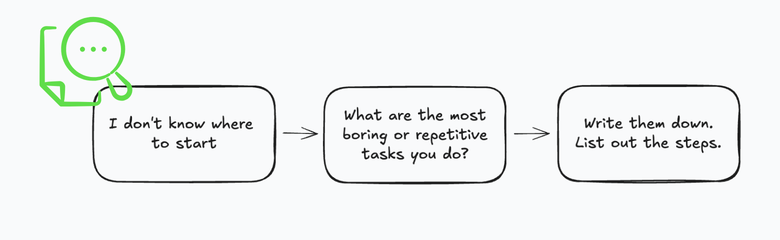
Use Frustration as Data
The tasks your employees complain about the most are almost always the best candidates for AI. Why? Because "boring" almost always means repetitive, rules-based, and predictable. This is exactly the type of work AI excels at.
Instead of brainstorming abstract use cases, start with a simple exercise: ask your team what they dread doing every week. The answers will point you directly to your highest-impact opportunities.
30-Minute Exercise
Start Your 30-Minute Frustration Audit
Work through these four steps with your team to turn daily complaints into a prioritised list of AI opportunities.
-
List the dreaded tasks
Ask each team member: "What task do you wish you never had to do again?" Collect everything — no filtering yet.
-
Score each task
Rate each task on two dimensions: how often it happens (frequency) and how much time it takes (duration). High on both? That's your target.
-
Check for patterns
Look for tasks that are rules-based, involve moving data between systems, or follow a template. These are AI-ready.
-
Pick your first win
Choose the task that's high-frequency, high-frustration, AND low-risk to change. This is your pilot project.